Writing
and
Rhetoric
This seminar is hosted by Res Futura, a Toronto-based collective of workers, artists, and students.
Registration is opening soon. Declare your interest: https://forms.gle/m8jniYJKi8qQke5y6.
Seminar overview. Writing is the practice of thinking. Good writing endows an idea with the power to persuade, to provoke, to instruct, and to attract. Bad writing, as the history of philosophy shows, deprives even the best arguments of their audience.
This seminar is an intensive series of lectures and workshops on the craft of writing. It covers the three traditional areas of literary instruction: grammar, logic, and rhetoric. Sound knowledge of grammar empowers the writer to construct the same thought in many ways, and to select the most vigorous expressions. Logic governs the construction of good arguments, revealing weaknesses and objections that would sap a reader’s convictions. Finally, according to the principles of rhetoric, vigorous sentences and sound arguments are combined into a forceful and persuasive whole.
Our subject is non-fiction, argumentative prose. We will not engage in depth with literary fiction or poetry. This seminar is intended to be useful mainly for those engaged in intellectual work, whether academic, professional, or independent, who wish to improve their capacities in producing essays, research articles, journalistic articles, pamphlets, or books. However, material for the seminar may be drawn from other genres, depending on attendees’ interests.
Structure and participation. The seminar will meet once weekly, in-person, on the University of Toronto, St. George campus. Specific locations will be announced to registered attendees.
Each session spans two hours. Every other session will be a lecture led by the facilitator, where attendees will learn principles in grammar, logic, or rhetoric, and may be assigned homework. The alternating sessions will be workshops, during which attendees will be expected to take turns presenting their own writing and applying the principles learned during lectures.
Registered attendees must commit to attend every session, barring unforeseen conflicts. Attendees are expected to be active participants, and will be called upon to test their understanding, to present their own writing, and to volunteer useful critiques of others’ writing. While we will make every effort to foster a collaborative and non-judgmental group, workshopping one’s own writing always requires courage, and the workshop can only proceed if all agree to participate.
Instructor
James Yuan (james@jamesyuan.ca) is a registered psychotherapist (qualifying) and executive of Res Futura. He is a published researcher, essayist, poet, and translator. His lectures at Res Futura have included Theories of the Other, a survey of major social theories; Method and Rhetoric, a series on philosophical and scientific method; and Hegel: An introduction, an intensive introduction to Hegel’s core texts. He is currently preparing a book on the rhetoric of Hegelian dialectics.
Syllabus
Read more about the seminar texts and scheduled topics here.
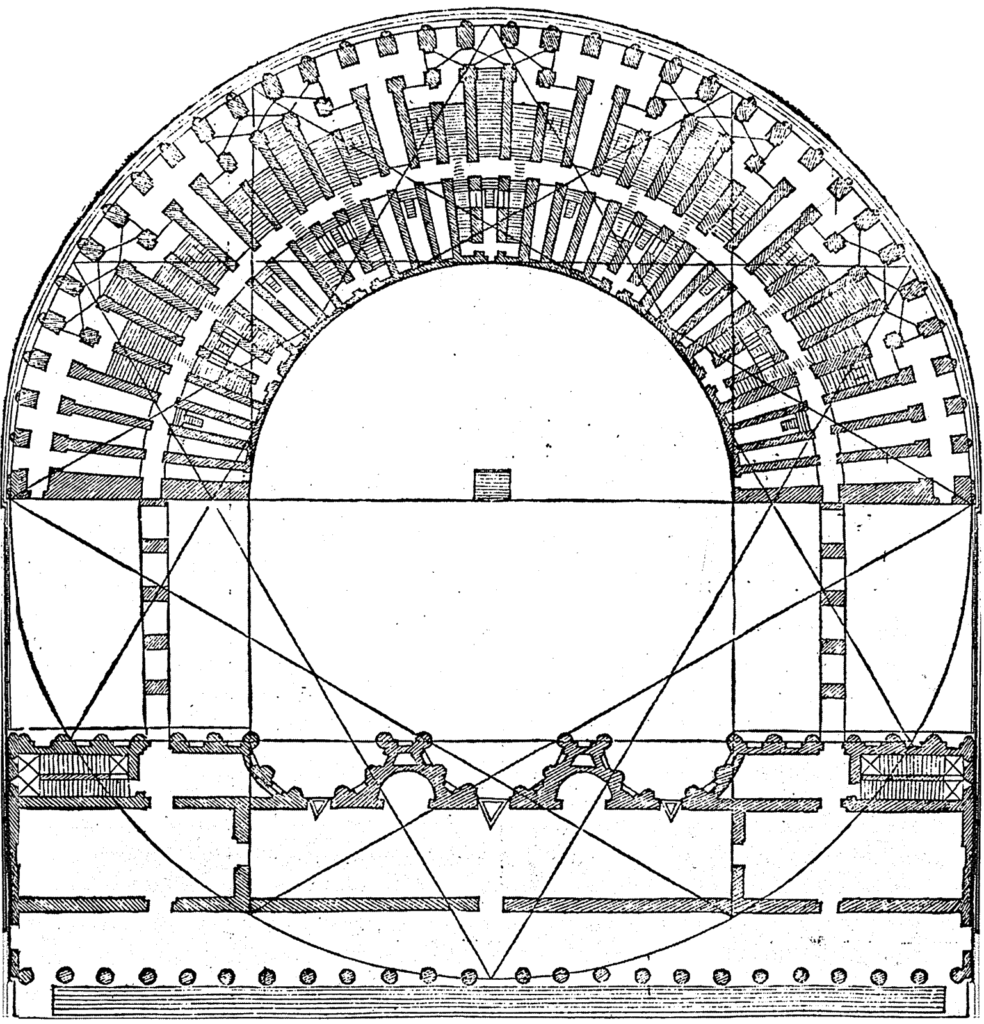
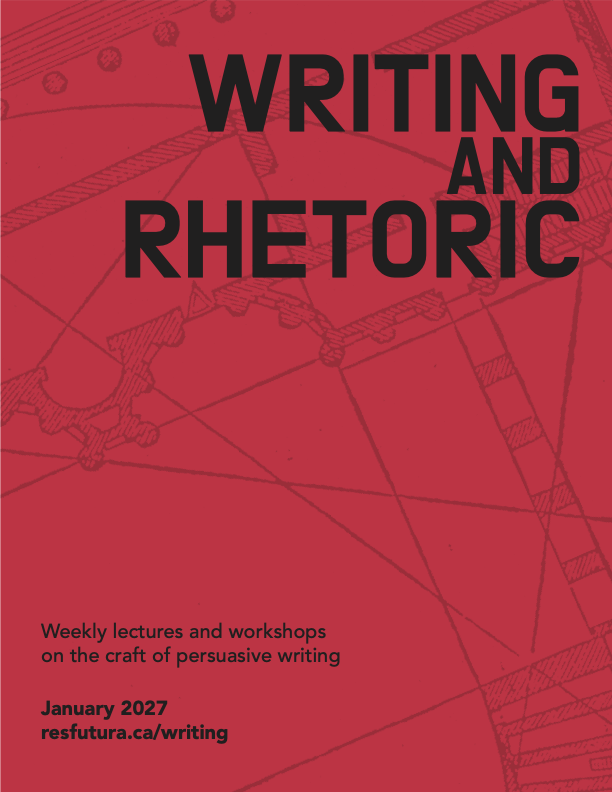
About the poster. The poster for this seminar is based on the plan of a Roman theatre, drawn by Renaissance architect Andrea Palladio. Our modern rhetorical tradition has its roots in the humanist scholars of the Renaissance, who rediscovered the classical rhetorical works of Aristotle, Cicero, and Quintilian. Classic and neoclassicist theorists of rhetoric understood their craft to be closely related to the art of architecture. Both were concerned with the construction of forms which should be strong, useful, and beautiful. Both wanted to invest their structures with a certain magical quality, by which their dwellers or listeners would be captivated and transformed for the better.